The best camping cots help you sleep comfortably, whether you’re car camping, overlanding, or backpacking. Our most recent field testing took testers Meghan LaHatte and Nick Belcaster around Colorado and across Washington, testing six of this year’s newest options on 16 separate camping excursions.
Whether you’re after a deluxe padded option like our top pick, the REI Co-op Wonderland Comfort Cot, or need something a bit more spend-wise, like the Kelty Lowdown Cot, we’ve found the best options for everyone.
All-told, we’ve likely slept on close to 50 camping cots in our days, and tested them all on comfort, setup time, portability, and durability — picking the best for every scenario. Read on for our suggestions and considerations when choosing your own camping cot.
Editor’s Note: We updated our Camping Cot guide on May 7, 2026, to improve our buyer’s guide with better insights and hot tips.
The Best Camping Cots of 2026


REI Co-op Wonderland Comfort Cot
-

-
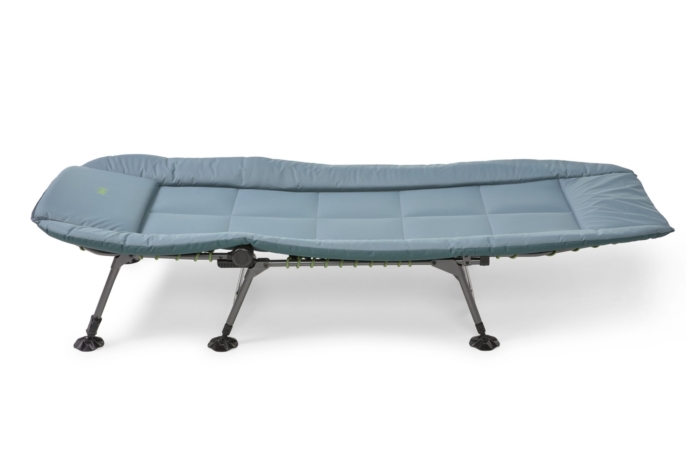
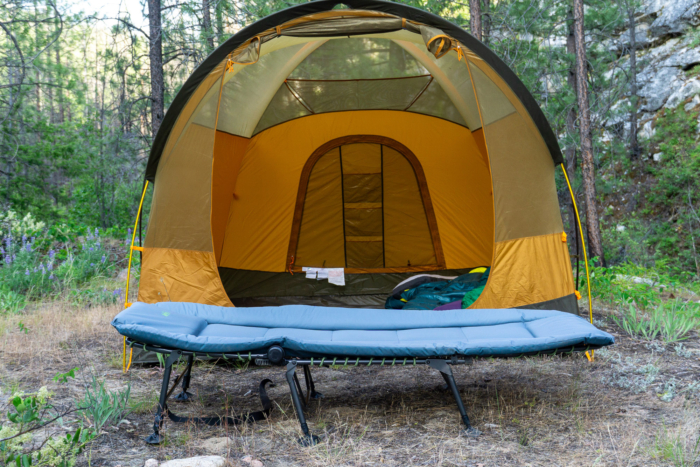
The REI Wonderland Cot provided an excellent sleep quality with its built-in cushion; (photo/Nick Belcaster)
-
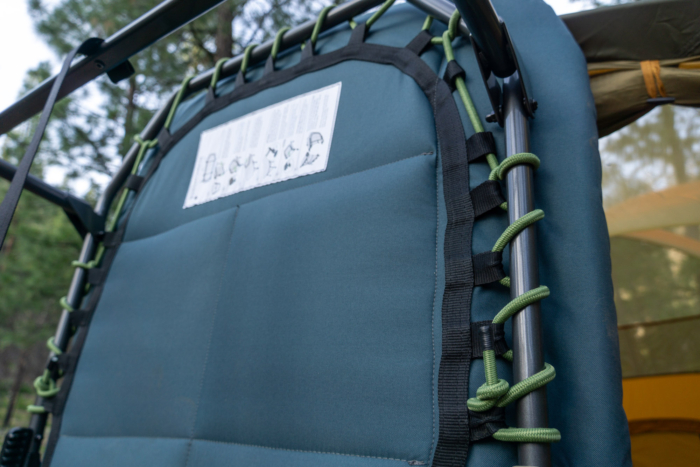
The shock-corded suspension on the Wonderland provides more comfort than most cots; (photo/Nick Belcaster)
-
Extendable legs at the head end allow you to sit up slightly; (photo/Nick Belcaster)
-
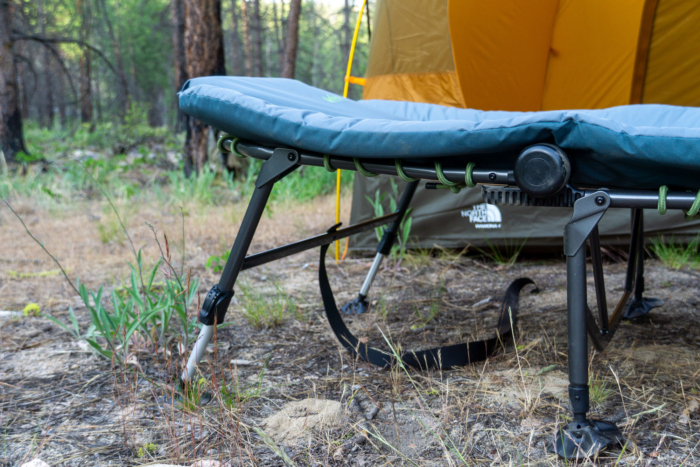
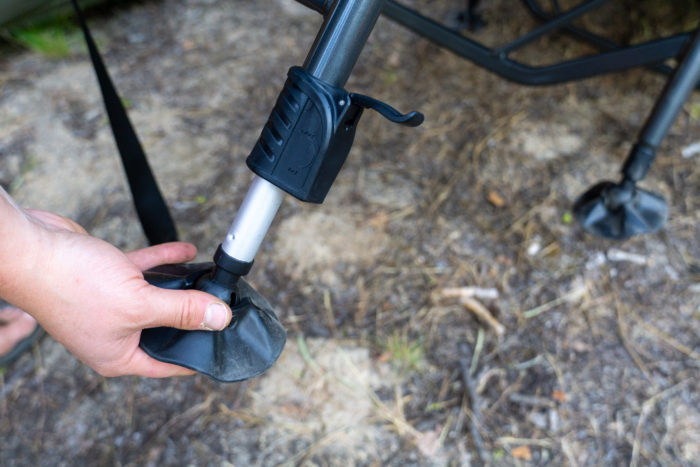
The wide feet of the REI Wonderland cot accommodate many different campsites; (photo/Nick Belcaster)

Specifications
Pros & Cons
Pros
- Very comfortable integrated sleeping pad
- Spacious sleeping area
- New carry strap included
- Adjustable firmness
- Easy to assemble (as easy as it gets, really)
Cons
- Not as comfortable for stomach sleepers
- Large packing size
- Heavy
The Quick & Dirty: This all-in-one option adds a padded, suspended sleeping surface, making it one of the most comfortable. It’s also one of the largest when packed, but for most campers, this is the cot to get.
With a built-in plush pad, strong frame, and a super-easy set-up, the REI Co-op Wonderland Comfort Cot ($250) easily landed at the head of the pack as our best overall camping cot. This cot is nigh-identical to our previous top pick — the REI Kingdom Cot 3 — with only the name and an added carry strap being the difference.
In our testing, none matched the comfort this cot provided, and it’s adjustable, sitting atop a springy platform that uses an adjustable shock cord so you can dial in your preferred level of cushioning.
After an easy fold-out setup (comes fully assembled), this cot provides a very stable, confidence-inspiring base. The steel and aluminum legs are capped at the base with round discs that tilt to match the slope of the ground, and are safe to put on a tent floor without risk of tearing.
For side and back sleepers, this feels like a really luxurious cot. The padding is ample, and the springy base absorbs weight without making you feel like you’re bouncing around. Weight gathers in the center of this pad, which makes it ideal if you like rolling from side to side, or simply passing out on your back. Stomach sleepers, such as senior editor Nick Belcaster, however, reported some trouble with the built-in cradling.
At 82” x 31.5” deployed, this pad was plenty large enough for a tall friend and is rated for 300 pounds. At 20 pounds, it’s not ideal for any type of pack-in camping, but it would serve as a comfortable, durable option for car camping. It’s so comfortable that we wouldn’t hesitate to use it as an extra bed in a hotel room or cabin.
The packed-down size is a bit large (33” x 32”), so it may not be the best option if you’re low on space, and you might consider the REI Co-op Campwell — a full-sized cot that packs more compactly. If a good night’s sleep is your priority, however, we’d recommend making room for the Wonderland Comfort cot. It could even make an excellent spare room bed for guests.
REI Co-op Campwell Cot: The Lighter-Duty Sibling
The Campwell Cot is also from REI, but prioritizes packability over built-in comfort as the Wonderland does. In its collapsed state, the cot is no bigger than a folding camp chair, while the packed Wonderland is more cumbersome to cart around. You’ll need to add a thin camping mattress to the Campwell to duplicate the comfort of the Wonderland, however; and it’s on the narrower side of cots at 25″ wide. Our take: the $130 in savings by going with the Campwell can be put toward a self-inflating pad like the Sea to Summit Pursuit, and you’ve now got a more versatile sleep system for the same spend.
Cabela’s Lounge Cot: The Hook And Bullet Dupe
The Lounge Cot takes a lot of inspiration from the Wonderland Comfort Cot, and uses a similar shock-cord suspended pad for a sleep surface. The Lounge Cot does sport a fourth set of legs compared to the Wonderland, and all of the feet are independently adjustable (while only two on the REI cot are). The Lounge Cot can also lean up further, and there’s a sewn-on organizer. A 3-pound difference in weight is gained with those features, however; so decide if they’re worth it before pivoting.
Kelty Lowdown Cot
-
-
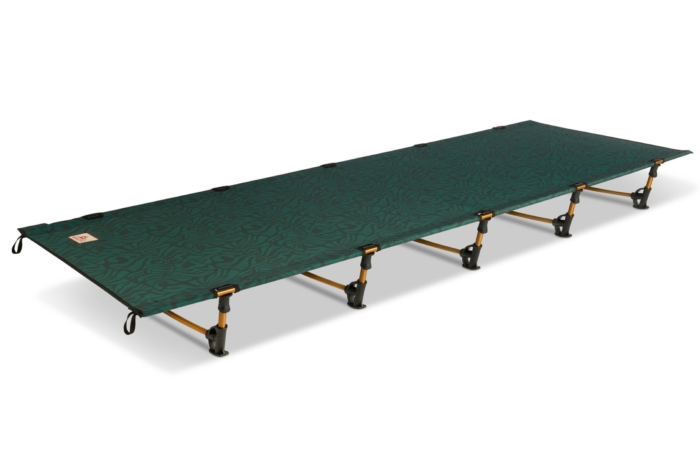
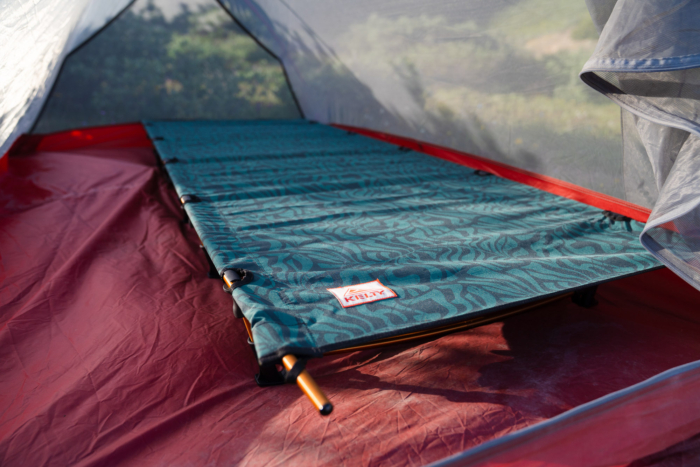
The Kelty Lowdown Cot easily fit in my 2-person tent at just under 75 inches in length; (photo/Meghan LaHatte)
-
Testing out the Kelty Lowdown Cot on a backpacking trip near Crested Butte, Colorado; (photo/Meghan LaHatte)
-
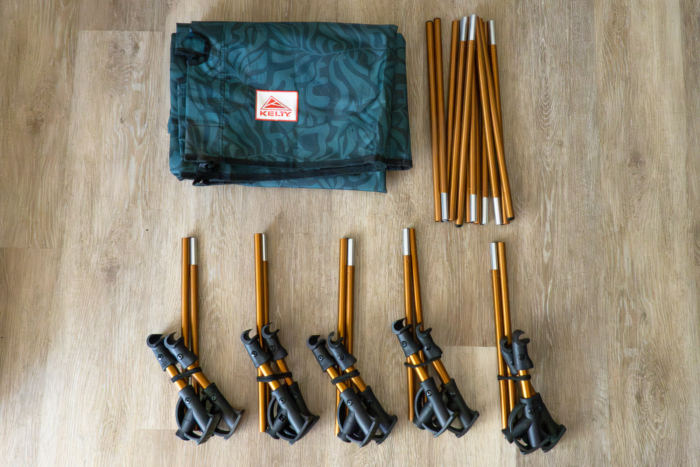
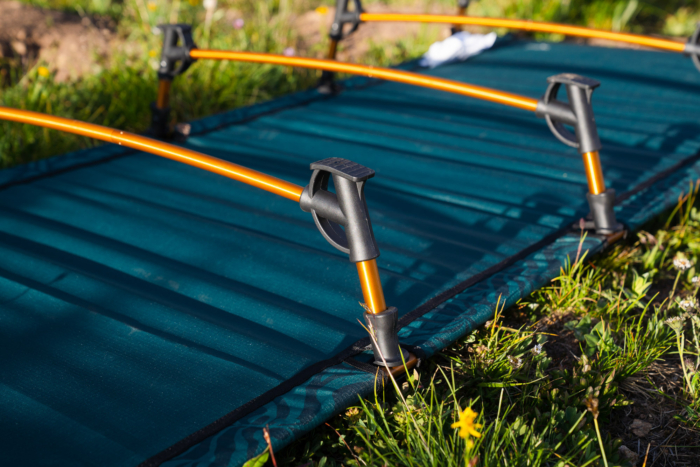
Inside the Kelty Lowdown’s bag you will find 5 legs, two poles, and the cot material; (photo/Meghan LaHatte)
-
The aluminum legs and poles are flexible for easy installation and durable enough to hold 300 lbs; (photo/Meghan LaHatte)

Specifications
Pros & Cons
Pros
- Quite small packed size
- Only 5 pounds but can support up to 300 pounds
- Aluminum legs aren't so slight as to seem fragile
- Competitive price with budget models
Cons
- Setup is a bit involved, with some muscle needed to seat the legs
- Low height may not play nice with some folks' knees
The Quick & Dirty: This cot is a great choice for backpacking when you need a compact and inexpensive option. The tradeoffs come in a more involved setup and low sleeping height.
For campers who need to a bit of camping comfort without spending $300, the Kelty Lowdown Cot ($150) is the ultimate value-to-dollar champion. While premium ultralight models can cost (and weigh) more than double, the Lowdown manages to weigh in at a lean 4 pounds, 12 ounces, making it light enough to haul into walk-in campsites or short-range backpacking loops.
To verify its real-world comfort, lead tester Meghan LaHatte spent a summer in the high-alpine terrain of Crested Butte, Colorado, specifically evaluating the Lowdown as a chronic side sleeper. Despite its minimal profile, the cot provided a medium-firm tension that supported the hips and shoulders without the hammock sag common in budget designs. The 27.5-inch width was a standout number, offering enough lateral space for a restless sleeper (and even a small dog) to move comfortably through the night.
The Lowdown’s low-profile design isn’t just about saving weight; it’s an advantage for small-tent campers. Sitting just 6.75 inches off the ground, it provides enough headroom in two-person backpacking tents. During testing, this height also allowed the cot to double as a stable camp couch for morning coffee.
Durability was scrutinized across various environments, from fireside desert camps to rocky peaks. The 600D ripstop fabric showed zero signs of abrasion or thinning, even when treated with less-than-delicate care. While the five-leg assembly requires a bit of manual effort and leverage to snap into place, the result is a high-tension sleeping surface that remains remarkably quiet. Meghan noted that the cot produced almost no noise during tosses and turns.
Ultimately, the Lowdown is the best choice for those seeking a “set-and-forget” gear investment. It rolls down into a compact 7” x 17” zippered bag that disappears into a duffel or trunk, yet offers a significant sleep upgrade over a standard air pad. If you are under 6 feet tall and want a dependable, quiet, and packable sleeping system that leaves plenty of room in your budget for other adventures, this is the cot to beat.
Big Agnes Goosenest Double-Decker Inflatable Cot: An Inflatable Backcountry Boxspring
Inflatable cots are few and far between, but the Goosenest is probably the option if you want a backpacking cot of this style. Compared to the Lowdown, the Goosenest is a bit heavier at just over 7 pounds, as well as bulkier when packed, making it backpackable, but only just. The Lowdown feels more stable when slept on compared to the Goosenest, but you will get more vertical added to your sleep system by using the inflatable option (certainly so if you stack the pads in the double-decker configuration). For most backpackers, we think the Lowdown or Helinox Lite Cot is a better option.
DOD Bed In Bag Cot: A Slightly Smaller (But Heavier) Pick
The Bed In Bag Cot from Japanese manufacturer DOD is a pretty close partner to the Lowdown Cot, but is better sized for smaller campers, and is a little heavier in the pack. The 6-inch length of the Bed in Bag makes it work for many but not all users, while the 3 inches added to the Lowdown makes it a bit more accommodating. The DOD cot is also a bit heavier at 5 pounds, 11 ounces (around 1 pound heavier than the Lowdown), and has a lower weight rating of 265 pounds. The price is the same for both cots, but the Lowdown has our vote for now.
Helinox Cot One Convertible
Specifications
Pros & Cons
Pros
- Ability to be used in a low height, or raised with optional legs
- Extra-tight frame assembly is very supportive
- Durably made components
- Bluesign-approved materials
Cons
- Sits fairly low to the ground without legs
- Optional legs are $100 extra
The Quick & Dirty: This cot is height-adjustable and sets up to be quite steady and supportive. The legs needed to change the height are sold separately, however, and cost an extra $115.
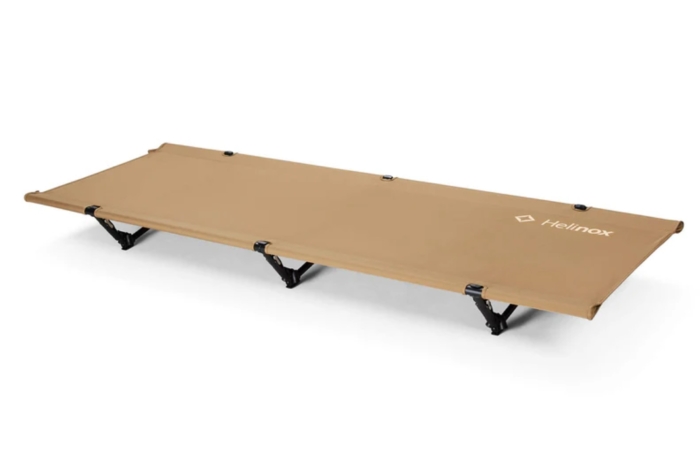
The Helinox Cot One Convertible ($400) is almost 2 pounds heavier than the brand’s Lite Cot. But it makes up for the difference with a unique tensioning system. This Helinox also has a trick up its sleeve: Depending on your needs, this cot can be run at a low-to-the-ground 6.5-inch station or elevated up to a comfortable 15-inch height.
The levers tension and lock the legs into place with a single action. This design difference makes the cot platform much tauter than the Lite Cot can manage. And if you’re looking for support, this cot has it. Because you don’t need to muscle the legs in and out of place, the setup and takedown are quicker, too.
You’ll want to include a sleeping pad for optimum comfort. However, we tried it on its own, and it’s comfortable enough, granted you have a warm enough sleeping bag. The added cushioning of a sleeping pad (we used Exped’s Dura 3R) was well-appreciated. The sleeping platform is a bit larger than other Helinox designs (2 inches longer and 2.5 inches wider than the Helinox Lite), which makes using modern-sized sleeping pads easier.
Even at the highest setting, it sits fairly low to the ground, so it isn’t a great choice for people who have trouble getting in and out of bed. That said, Helinox does offer additional legs ($115) to add on if you want to be situated higher off the ground. That adds to the weight and bulk of your pack, but if you do have the room, it might be the most comfortable sleeping experience you’ll have in a remote campsite.
If you’re planning on rucking the cot out with you (and don’t have space to bring a separate sleeping pad), go for the brand’s Lite Cot, which will also provide some built-in sag. But for building out a basecamp and providing your own padding? The more rigid (and adjustable) Cot One Convertible makes better sense in our minds.
Helinox Lite Cot: A Stripped-Back Version For Backpacking
If adjustable height doesn’t matter to you, the Lite Cot is Helinox’s backpacking-ready version of the Cot One Convertible. The sleeping area is a bit smaller by about 2″ in both dimensions, but it’s still room enough to be comfortable while backpacking. The legs on the Lite Cot are also simpler and lack the tensioning levers of the Cot One Convertible. Packed size and weight are where the backpacking version pulls ahead, and you’ll save 2 pounds by carrying the Lite Cot over the Cot One.
REI Co-op Campwell Cot: A Taller Cot (Without Needing To Buy Extra Legs)
The 18″ platform height of the Campwell Cot is even taller than the possible 15″ the Cot One Convertible can accomplish, and you won’t have to buy the optional legs to get it. The fit and finish of the Helinox cot feels more premium (the DAC aluminum frame and tensioning handles help a lot), but this also drives the price up to more than double what the Campwell is offered at. If you want the nicest option out there, go Helinox; for better cot height and less out of pocket, go REI.
Teton Sports Outfitter XXL Camp Cot
Specifications
Pros & Cons
Pros
- Huge sleeping space between a full and queen-sized mattress
- Easy fold-out assembly
- Pairs with Outfitter XXL Camp Pad
- 600 pound capacity can accommodate two smaller campers
Cons
- Large packing size
- Heavy at north of 25 pounds
- Doesn’t fit in smaller tents
The Quick & Dirty: This is the cot to get if you’re outfitting a hunting camp, or need the highest weight limit and space to spread out. It’s a heavy cot, and tough to move around, but it’s worth it.
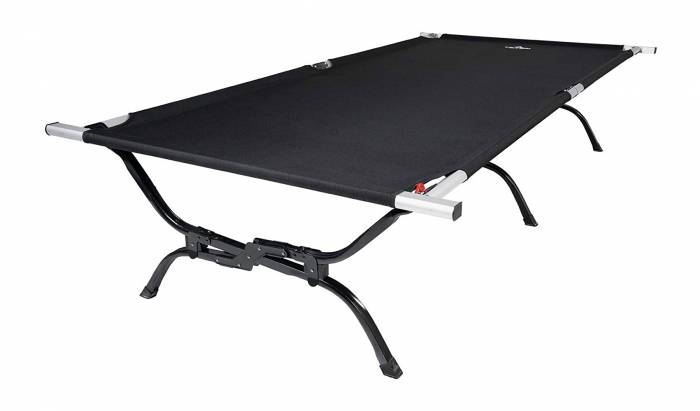
If you want the roomiest cot available, the Teton Sports Outfitter XXL Camp Cot ($200) is the best bang for your buck. With a whopping 81 inches from head to toe, a 41-inch width, and a 600-pound(!) capacity, you could easily fit the average sasquatch in it for a good night’s sleep. Compared to average cots, that’s a good 35% more sleeping real estate.
If you don’t know any bigfoots (bigfeet?), we also found it’s great for larger folks or people who toss and turn in their sleep, as well as the bulky hunter-types we typically find ourselves bunking with at elk camps. Smaller couples who are fond of cuddling will also appreciate the roomy platform it provides.
The S-leg design is the first we’ve seen of its kind. The unique shape of these steel legs provides sturdiness and support. Plus, the brushed canvas is comfortable if you want to plop down on it for a midday nap.
We love the lever-arm setup as well, which we’ve only otherwise experienced on Cabela’s Big Outdoorsman Cot. Many sleeping cots are notorious for how hard it is to pull the last corner of canvas over the frame, but the integrated lever uses added leverage to make it easy for one person to set it up and break it down.
All that king-sized comfort does come with its downsides, as this camp cot is quite large, both packed and unpacked. That can be a drag in transport, and in ensuring it’ll fit into your tent! In our opinion, the choice to go with the XXL Camp Cot comes down to width and length. The extra 6 inches of headspace and 10 whole inches of room to toss and turn mean this cot lands somewhere between a full-sized and queen-sized mattress. It also pairs with Teton’s XXL Camp Pad, a 2.5-inch-thick closed-cell foam sleeping pad that makes this cot feel even more like your bed at home.
Cabela’s Big Outdoorsman Cot: Another Hunting-Ready Option
The Big Outdoorsman Cot is similarly dimensioned to the XXL Camp Cot, but offered at $50 less. The sleeping area on the Teton Sports cot is about an extra inch in both dimensions, but functionally, it doesn’t amount to much difference. The weight limits are also the same at 600 pounds, meaning nearly anyone can use these cots. Price and weight are the tradeoffs between these two options, with the Big Outdoorsman weighing an extra 5 pounds but selling for $50 less. If that doesn’t matter to you, make the switch and save your money.
REI Co-op Wonderland Comfort Cot: A Cushioned Upgrade
The Wonderland Comfort Cot can’t match the XXL Camp Cot in sleeping area (it’s 10″ narrower), but it does one-up it in built-in comfort. The padded, suspended sleeping surface is ready to go, while you’ll need to add a camping mat to the XXL Camp Cot to get the same quality sleep. The Wonderland is also lighter at 20 pounds compared to the XXL’s 26, but you won’t get nearly as high a weight limit: the 600 pounds the Teton cot is rated for is double what the Wonderland can safely support. If this cot is just too much to handle, consider the REI as a safe second bet.
REI Co-op Campwell Cot
Specifications
Pros & Cons
Pros
- Super easy assembly and disassembly
- Packs into a sleek carrying bag
- Sits high off the ground
Cons
- Hard to maneuver around camp
- Fabric on bag and sleeping area prone to wear and tear
The Quick & Dirty: A spend-wise cot that sets up easily and sits high off the ground. The sleeping area is narrower than most at 25″, but if you don’t need more space, this is a great option.
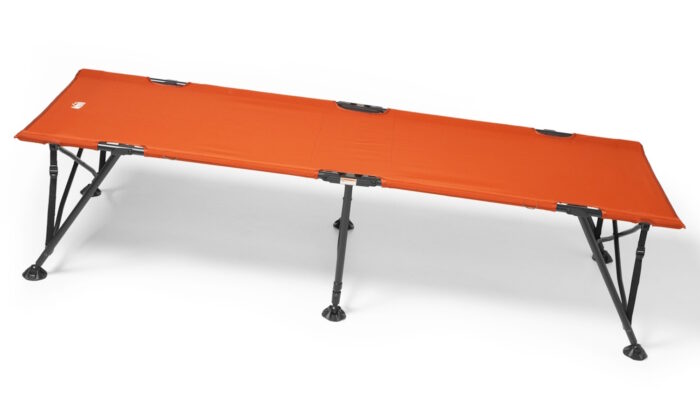
When it comes to camping cots, it’s pretty hard to beat the ease and convenience of fold-out models. However, most folding cots tend to fold into larger flat shapes that are more cumbersome than collapsible models. This is where the REI Co-op Campwell Cot ($120) really takes the cake, as it is a fold-out option that collapses into a bag similar to that of a camp chair.
The Campwell Cot takes less than 2 minutes to set up (yep, we timed it). It is perfect for those wanting a simple sleeping solution that isn’t complicated or too bulky once packed away. The carrying case even has a sling on it, so you can throw it over your shoulder while you move gear into camp.
To construct this cot, start by folding it out from the carrying case. Once the legs are pushed up into the right position, tighten each suspension strap located at the four corners of this cot. As a final step, you can flip it over upright, and voilà, you’ve got a fully functioning cot!
We think this cot would be perfect for slumber during summer months as the fabric is thinner than most of the others listed. For winter camping, we opted to use a sleeping pad to help insulate and keep us warm. The base fabric is also more stretchy, so keep that in mind if you’re on the lookout for something stiffer.
With no need for hassling with poles or putting in the extra elbow grease, the quick assembly of the Campwell Cot means you can get to your adventures even faster. However, we recommend setting this cot up in your tent, as it doesn’t retain its shape once picked up. The middle collapses when picked up, so it is a little awkward to maneuver.
This cot’s height sits at a whopping 18 inches, making it perfect for storing bags and other gear underneath while at camp. Higher profile options like this and the Teton Sports Outfitter XXL Camp Cot make getting in and out of bed easier, but lower profile options like the Helinox Lite Cot are better suited for tent camping, especially if you’re backpacking and need to keep things lightweight.
Overall, the Campwell Cot from REI Co-op truly impressed us during the cot testing process. We can’t help but give it praise for its effortless setup, sleek packing solution, and overall comfort while camping.
Cabela’s Big Outdoorsman Cot: A Bulked-Up Upgrade
The Big Outdoorsman Cot is only $30 more than the Campwell, but it has a stronger frame and a higher weight limit if you need some extra support. You will lose out on the impressive packability and ease of setup that the Campwell hosts, however. Sleeping space on the Campwell equates to around 13 sq. ft., while the Outdoorsman is nearly double that at 23.5 sq. ft. If hauling around and setting up the bigger cot doesn’t bother you, you can get a lot more space for a little extra spend.
Mountain Summit Gear Horizon Cot: Not Quite As Simple to Set Up
The Horizon Cot uses a similar camp chair-ish frame that expands and collapses into itself. The difference is that the Campwell Cot ties every piece together, while the Horizon requires threading the two long spars through the sling and then attaching them to the frame. We found that setting up the Campwell was noticeably easier than our budget pick, and that it resulted in more storage space under the cot (the frame of the Horizon Cot prevents this).
Helinox Lite Cot
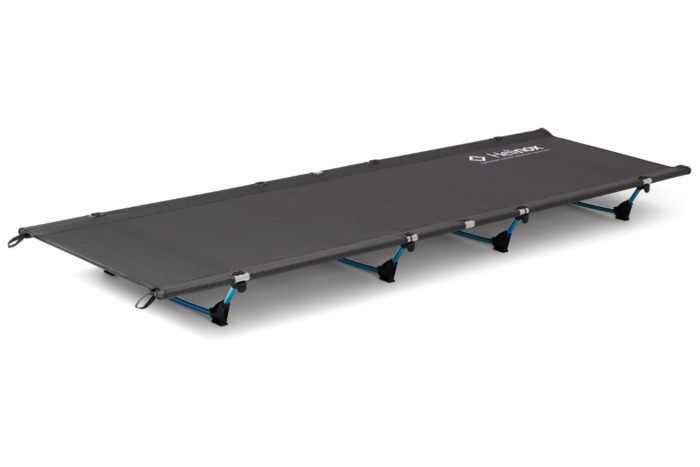
Specifications
Pros & Cons
Pros
- Lighter than many camping mattresses
- Packable compressed size
- Comfortable sleeping area
- Low sleeping height can be a benefit for sleeping in backpacking tents
Cons
- On the pricier side
- Lots of pieces (6 poles and cot)
- Muscles necessary for setup/breakdown
- Only 6' long
The Quick & Dirty: Weighing less than three pounds, this cot is the choice if you want to carry it for any distance. It compromises sleeping comfort, being low off the ground, but it packs up much smaller than most any other cot.
Most of the cots you’ll see on the market are mainly for car camping, as their weight and packed size make them impractical for hike-in spots or backpacking. The Helinox Lite Cot ($350) is an exception to this rule, and it opens up the opportunity to inject a little luxury into your next short backpacking trip.
Weighing just 2 pounds, 12 ounces, and packing smaller than the size of a closed-cell foam pad, this cot can easily fit in a backpack or be strapped to the outside. With the above-ground benefits of 5 inches and a lightweight design, it provides more comfort per ounce than almost any other sleeping system on the market.
The DAC aluminum frame will hold up to 265 pounds, which is on the lower end for camping cots, but should still accommodate most hikers. The polyester material is taut and reliable, yet forgiving enough to cradle your body.
Compared to other ‘packable’ camping cots that are inflatable, we’re far more sold on the minimal frame design of the Lite Cot, as the dead air space of inflatable cots is tough to warm up, and balancing another sleeping pad on top can get a bit wobbly.
One warning: it is very hard to set up inside a small tent, as you need to use serious finger muscles to get the four leg extensions on. If you need more sleeping space, the Helinox One Max Convertible adds 8 inches of length and 3 inches of width. The 6′ overall length of the Lite Cot might be limiting for some taller campers.
In addition to its minimal weight, one of the best features of the Lite Cot is its versatility. Resting about 5 inches off the ground, it can fit into most one-person tents, yet you can still sit upright without hitting the ceiling. However, we came to appreciate this cot most as the ideal cowboy camping platform, as it provides a small buffer between you and the ground.
Kelty Lowdown Cot: Another Lightweight Cot For Less Out of Pocket
The Lowdown Cot provides a similar experience to the Lite Cot, but for more than half the price. You won’t get the premium fit and feel of the Helinox cot (which uses DAC aluminum alloy poles), but the Kelty does edge out the Lite Cot in a few spots. The sleeping surface is both 2″ longer and 5″ wider on the Lowdown, and it claims a 300-pound weight limit, while the Lite Cot taps out at 265. Both of these cots will suffer greatly near the limit, however, so this is more of a draw. The lower weight of the Helinox cot is undeniable at 2 pounds, 12 ounces, so if you’re choosing purely on backpackability, go with the Lite Cot. If you’re willing to carry two more pounds, however, the Lowdown is a great alternative.
ALPS Mountaineering Ready Lite Cot: A Similar Idea, But About Double The Weight
The Ready Lite Cot is a more lo-fi version of the Helinox Lite Cot concept, using a slightly lighter 420D ripstop polyester and all-aluminum legs and struts. This doesn’t pan out in a lighter weight, however, as the ALPS cot weighs 5 pounds, which is a little more than 2 pounds heavier than the Lite Cot, and that matters in cots meant for backpacking. The sleeping surface is a bit more generous, however; and if the Helinox Lite Cot or Kelty Lowdown is too small for you, the Ready Lite is the largest of the bunch. The $400 price tag seems a bit too high to us, but if you want a backpacking-ready cot with generous dimensions, this is the answer.
Pacific Adventure Works Hideaway Sidekick
-
-
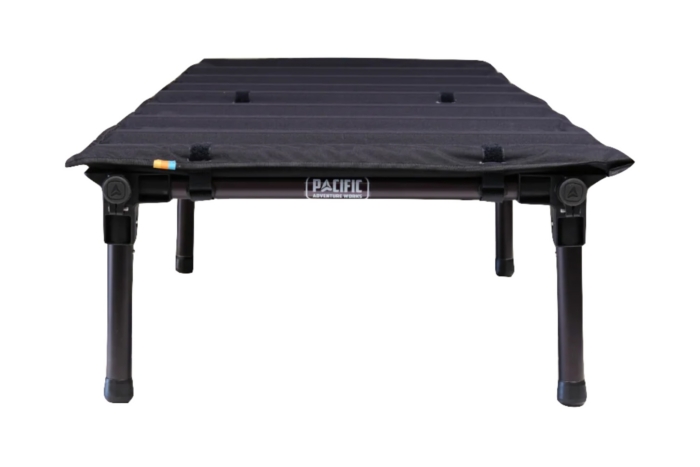
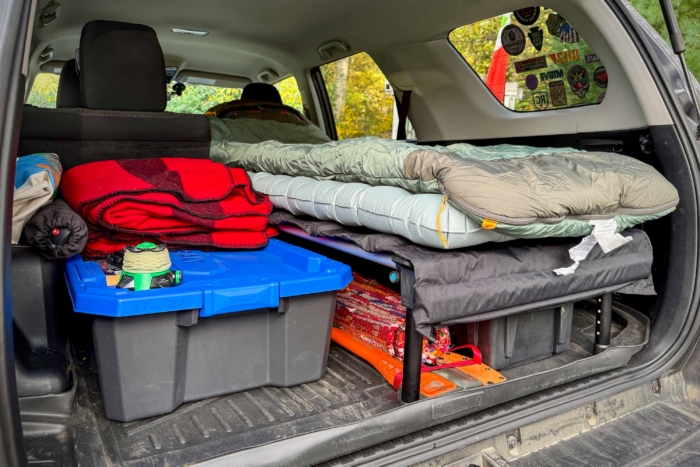
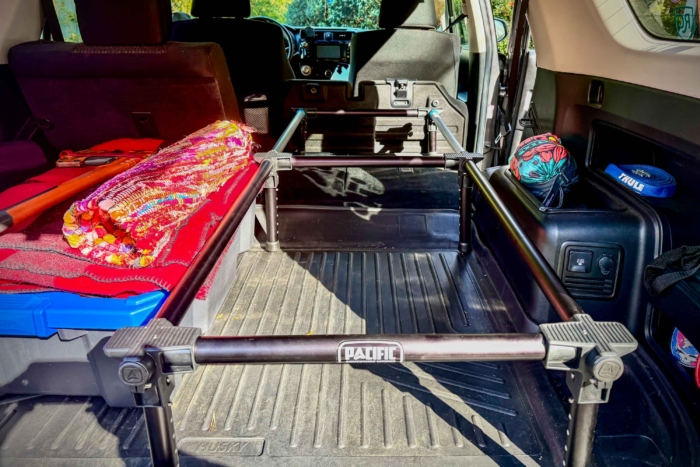
The Hideaway Sidekick set up in a 5th gen 4Runner; (photo/Nick LeFort)
-
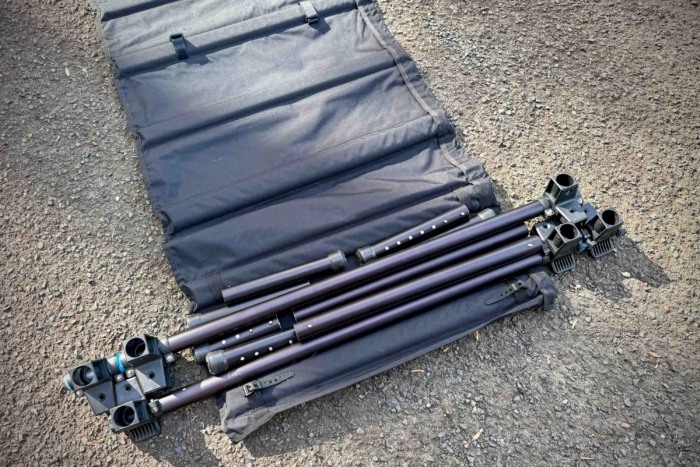
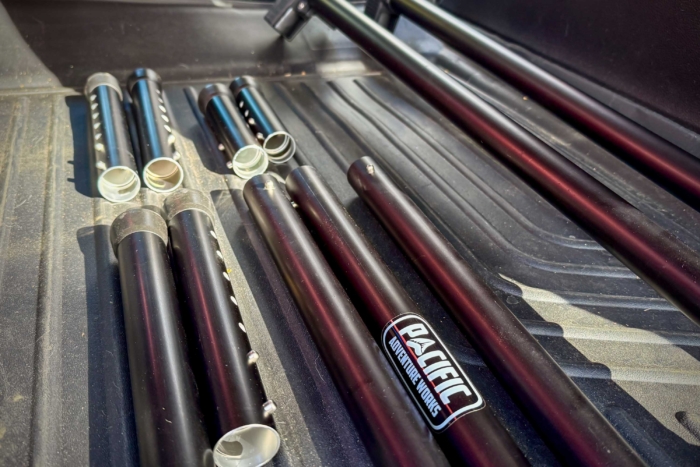
The Hideaway Sidekick platform is easy to assemble, disassemble, and store; (photo/Nick LeFort)
-
In the back of a 5th Gen 4Runner, the Hideaway: Sidekick fits like a glove; (photo/Nick LeFort)
-
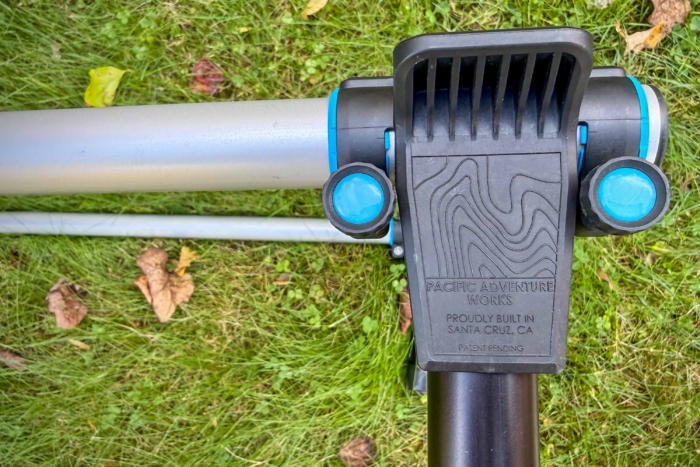
Pacific Adventure Works offers different adjustable legs for the perfect fit; (photo/Nick LeFort)
-
(Photo/Nick LeFort)
Specifications
Pros & Cons
Pros
- Build quality and weight
- Easy setup and adaptability
- Underneath storage
Cons
- Pricey if you’re only going to use it a couple of times a year
- Multiple options out there for less
The Quick & Dirty: The car-camping-specific cot is a no-nonsense build that is suited to the backseats and beds of many vehicles. It’s expensive but also a high-quality piece of equipment.
The Pacific Adventure Works Hideaway Sidekick ($650) is our new choice in camping cots meant to be used in the back of your trail rig. A burly aluminum and 500D CORDURA build make it no-nonsense, and a series of different leg kits allow you to dial in the system for your vehicle.
The Hideaway is available in four different widths (single occupant 24″ and 30″ versions, a double 40″, and an XL 48″). Car camper Nick LeFort tested the 24″ Hideaway ‘Sidekick’ in his Toyota 4Runner last year. Shopping anxiety? The brand facilitates verifying which platform size will fit in your vehicle, as well as which ‘Leg Kit’ you’ll need, which can accommodate flat, uneven, and stepped floors. The design is highly versatile, and the range of vehicles it can be used in is wide.
Six aluminum legs support the tube frame, and it all connects through robust nylon connectors. On top of that, the flexible platform affixes and can be rolled back for better access beneath. Sleep comfort was given high marks in our testing, with no creaks or unstable wobbles noted (when used with a 4″ thick pad like the Sea to Summit Ether Lite XR), and plenty of headroom given the adjustable length legs. The length of the platform even adjusts as well, telescoping from 39″ to 72″ easily.
The storage area you retain by using the Hideaway is the real reason for going with a car camping cot: “[The design is] so minimal that I left the Sidekick set up for a week while I traveled around New England. I didn’t have to take anything out of my vehicle, and was able to add even more gear,” LeFort reported. Your camp bins store easily in the space below the platform, which can be between 8.5″ and 14.5″ of space.
Because the sleeping platform on the Hideaway is rigid, you’ll need to add a camp mattress (something you’ll do with some, but not all, camp cots). This does send the total price even higher, and it’s already fairly high at $650 for the smallest Sidekick version of the Hideaway. Comparable options out there include the Flated Air Deck, a drop-stitch inflatable sleeping platform available for about $100 less. We think the extra spend on the Hideaway is worth it, however.
Hele Outdoors Hele Box: Another Height-Adjustable Option, Better Price
The Hele Box from Hele Outdoors is a similar take on car-camping cots compared to the Hideaway platform. The biggest differences are in the deck materials, which are wooden slats in the Hele, and the $250 extra you’ll need to spend on the Hideaway. Build quality helps explain this difference, as the structure of the Hideaway is more robust, and the wood used in the Hele is a less expensive platform material than the aluminum slats and 500D CORDURA textile cover on our award winner. There are also two more size variations of the Hideaway compared to the Hele, which is offered in a single and double size (the Hideaway adds a single + and XL size). Consider the Hele if you need to save, and the Hideaway if you want to splurge.
LUNO AIR Pro Vehicle Mattress: Not Technically A Cot, But a Better Backseat Sleep
The AIR Pro Vehicle Mattress isn’t really a camp cot, but when it comes to camping in the back of your car, an inflatable really can be a better choice at times. You’ll need to add your own camp mattress to the Hideaway, but the AIR Pro is its own — the tradeoff being in under-system storage space. The collapsed sizes of both options are similar, and both accommodate awkward gaps over the footwells. Price is the biggest difference here: the $350 for the AIR Pro well undercuts the $800 for the double-sized Hideaway. That could be worth it for you if the storage space gained is important to you. Otherwise, consider the LUNO.
Other Camping Cots We Recommend
The cots we’ve listed above are solid options for just about any camper, but they certainly aren’t the only options on the market. Check out our list of cots that didn’t quite make the award cut, but are still high-quality and just might be perfect for your next trip.
-
-
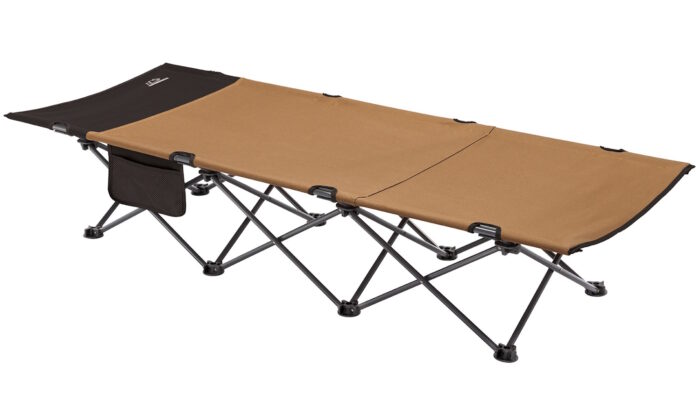
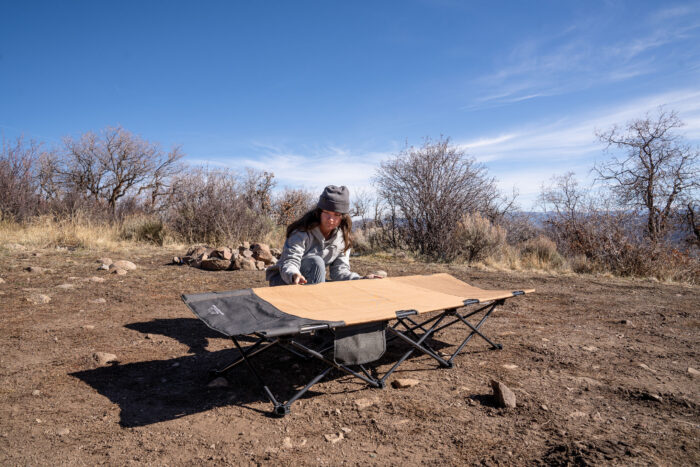
The fold-out assembly of the Horizon cot makes it simply to get ready; (photo/Meghan LaHatte)
Specifications
Pros & Cons
Pros
- Includes carrying case
- Easy to maneuver around camp
- Side pocket for headlamp and phone storage
- Durable
Cons
- Slightly narrow sleeping surface
- Setup initially challenging due to stiffness
- Not much storage space due to x-shape crossbars
The Quick & Dirty: A budget camp cot that doesn’t feel budget with a durable 600-denier sleeping surface. A 2.0 version is out now, but while we test it in-depth, the original is still available.
Reasonably priced, the Mountain Summit Gear Horizon Cot ($120) is simple to set up, maneuverable, and plenty comfortable for sleeping under the stars. This cot is designed for all-season car camping, and its sleek carrying case helps with transportation from vehicle to site.
Comfort is a standout feature on the Horizon. Thanks to its 600-denier polyester fabric, this cot is durable and flexible enough not to sag too much once in use. The sleeping platform can fit a sleeping pad and bag for added comfort and warmth if needed.
The cot’s durability makes it a reliable companion for multiday camping trips where resilience against wear and tear is paramount. The base frame’s puck legs help it stay flat on the ground without digging into your tent’s fabric. Once you’re finished using the cot, it easily disassembles into its carrying case that has an attached strap for simple haulage.
Our biggest issue with the Horizon Cot is its setup, which is a bit involved and requires first setting up the expanding leg component, and then threading the two spreader bars through the sleeping surface fabric. A final stretch to get these bars to attach to the leg structure requires some muscle to finish off, but it did get easier as we set the cot up multiple times.
If you’re on the hunt for an uncomplicated cot that is well-suited for car camping, look no further than the Mountain Summit Gear Horizon Cot. For 120 bucks, you get a comfortable sleeping solution that has straightforward assembly and impressive packability.
Coleman Trailhead II Cot: Serious Budget Alternative
The Trailhead II Cot is more of a traditional design with crosswise legs that require more muscle to assemble compared the Horizon Cot, which uses a modern camp chair-inspired leg structure that collapses compactly. Both cots are about the same length, but the Trailhead II is noticably wider with 10″ additional across the sleeping surface. The Horizon Cot is pretty reasonably priced at $120, but the $55 you’ll pay for the Trailhead II is even more budget-conscious. If storage space isn’t an issue, consider the swap if you want to spend that money elsewhere.
REI Co-op Campwell Cot: Same Price, Easier Set Up
Both the Campwell and the Horizion Cots share a similar support structure (and price) with a few key differences: The sleeping surface of the Horizon Cot is a bit larger, mainly in width (2.5″ of extra space). The support structure of the Horizion is also more stable, sitting on eight points of contact to the Campwell’s six. Set up is where the REI cot pulls ahead, with a much easier camp chair-like unfolding that requires little muscle. The Horizon, alternatively, is a multi-step process that takes some time to get right.
Specifications
Pros & Cons
Pros
- Huge sleeping surface
- Lever system helps with set up
- Thick and durable fabric
Cons
- Heaviest single-person cot on the list
- Three pieces (2 extra poles)
- It rocks back and forth a bit
The Quick & Dirty: Great extra-large option for hunting camps, cabins, or glamping trips. It’s pretty heavy to move around, but the price is right.
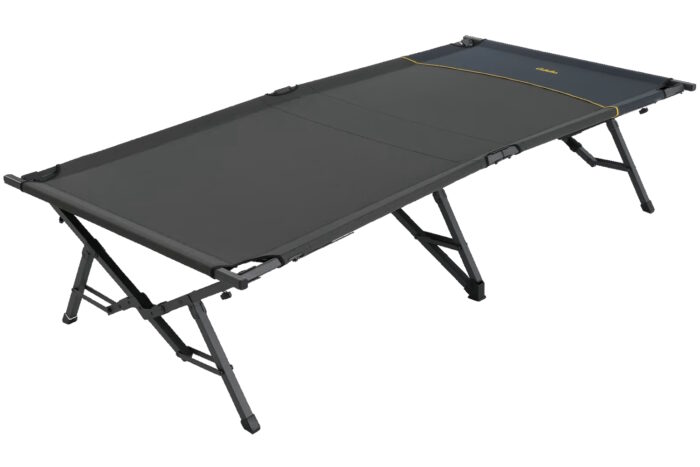
This beast of a cot from Cabela’s, the Big Outdoorsman Cot ($150), could literally fit a grizzly bear from Alaska! In all seriousness, a 6’9” person weighing up to 600 pounds can use this burly cot. At 40 inches wide, it nearly matches the size of a twin bed, so you could even cuddle close with that special someone or sprawl out like a starfish.
The water-resistant, 450-denier polyester top is thick and very supportive. Combined with the rugged, powder-coated steel frame, this portable bed is bombproof. The built-in tension lever arm, which helps snap the top and bottom crossbars in place, eases set-up.
The tradeoff is that it is as heavy as a child. Weighing in at 31 pounds, this mammoth bed is not fun to carry from your car to the campsite, although it does come with a large carrying bag. It is also huge, so it fits best in a monster family tent, but is even better suited for a small cabin or yurt.
If the Teton Outfitter XXL Camp Cot is a bit too rich for your blood, the Big Outdoorsman Cot from Cabela’s offers a more affordable option with much of the same appeal.
REI Co-op Wonderland Comfort Cot: The All-Arounder
The Big Outdoorsman Cot is specialized to provide for larger campers who need the added sleeping area, but if you don’t need that extra room, the Wonderland Comfort Cot weighs a full 10 pounds less and adds a good amount of built-in comfort with its padded mattress. You’ll need to pay an extra $100 for the privilege; but in our opinion, the Wonderland Comfort Cot is a better all-around choice.
Cabela’s Cot With Lever Arm: An Average-Sized Version
If you don’t need the king-sized sleeping platform of this cot, Cabela’s offers a nearly identical version that has a slightly smaller sleeping surface. The length is kept the same, while the width is 32″ in the less expensive version. The weight limit also goes down to 400 pounds, but this is still quite a high limit compared to other camping cots. Our take: If you’re going to go with the Cabela’s Cot, the extra $20 to get the width upgrade is worth it — if you’ve got the space in your tent.
Specifications
Pros & Cons
Pros
- Comfortable
- Roomy
- Side pockets
Cons
- Large packing size
- Heavy
- Assembly requires some muscle
The Quick & Dirty: This bottom-dollar military-style cot is simple, strong, and slightly difficult to assemble. If you can overcome that, it’s a steal at under $60.
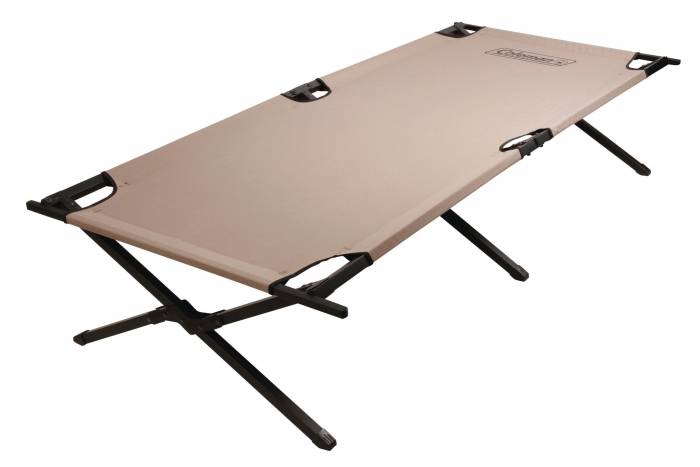
The Coleman Trailhead II Cot ($55) is spacious enough to fit sleepers over 6 feet tall and keeps all sleepers over a foot off the ground. The attached side pockets add a great touch of organization, holding your glasses, headlamp, and other smaller items.
The rails are slightly elevated to add security and prevent sleepers from rolling off. The canvas is firm and supportive, and it has a frame sturdy enough to withstand you and your tentmates fighting over who gets to sleep in it.
This cot’s steel X-shaped frame and double stitching add durability, giving you years of use before breaking down. It folds up and stores in the included carry case, so it’s easy to store and pack in the car.
At a whopping 21 pounds, from the house to the car is definitely the furthest it will travel, as there’s no way you’ll want to carry this bad boy in your backpack.
The biggest dig we’ve found with the Trailhead II is the assembly. We’ve had reports that the end braces are difficult to attach to the frame, making it likely that you’ll have to use some leverage to attach the second brace. But once you’re up and running, you’ve got one comfortable cot that won’t put too much of a hurt on your wallet.
Coleman Converta Cot: A Step-Up With Lounge Functionality
The Converta Cot from Coleman is one notch higher in the lineup compared to the Trailhead II Cot, and provides an easier setup as well as the ability to be used as a camp lounger. The price is only around $15 more for the jump, but there are some trade-offs for the added ability. The biggest is the width of the cots, which is a comfortable 35″ in the Trailhead II, but a more snug 25″ in the Converta Cot. Weight limit, too, is a bit lower in the convertible version at 225 pounds. If you want a piece of multipurpose camp furniture, go with the Converta Cot. Bottom dollar camp cot? Go Trailhead II.
Byer of Maine Military Cot: The Real Deal Military-Style Cot
The military-style cot is a classic design, and the Byer of Maine version is a more refined version compared to the Trailhead II. An aluminum construction replaces the steel used in the Coleman cot, allowing the Byer’s version to be the same weight but 10″ longer across the sleeping area. The weight limit is also higher at 375 pounds, which is one of the highest capacities in a single-camper cot we’ve tested. There’s a price for premium, and the $190 for the Byer of Maine cot is more than double what you’ll pay for the Coleman version. We think most campers are better served by sticking with Coleman.
Specifications
Pros & Cons
Pros
- Packing case and size is convenient
- Comfortable
- Simple assembly
- Capacity and length ideal for plus-size users
Cons
- Long size may not fit in smaller tents or cars
- Tough to fully insert sidebars into cot corners
The Quick & Dirty: This camping cot is unfortunately discontinued, but if you can snag one of the last ones, it’s a king-sized cot that’s simple to assemble and very roomy.
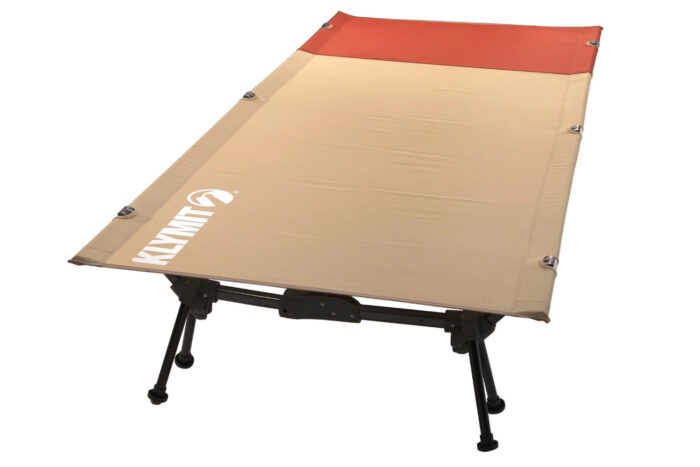
Klymit really brought it all with the Cedar Mesa Cot ($250). Ideal for taller users, this cot in its regular Large size measures almost 6.5 feet, while the XL is a little over 7 feet. This spacious cot is perfect for throwing in your tent, truck bed, or by the bonfire for some cowboy camping action.
The Cedar Mesa Cot took less than 10 minutes to put together the first time. Assembly is decently simple due to Klymit’s patent-pending Easy Lock technology on the crossbars. After mounting the side poles and legs to the crossbars, simply push down on each mechanism to lock it into place. This ensures the cot’s frame is secure without any unexpected wiggles or topples.
Even though assembly was overall quite easy, one of our testers did struggle to fully place the side poles into the corner fabric seams. This step required some bracing using the ground and a little elbow grease. However, once completely put together, the cot was easy to maneuver and carry around camp. It even disassembled and neatly packed into its included briefcase-size carrying bag.
For being so lightweight and packable, this cot is super comfortable to sleep on. While the cot itself is pretty firm, the 300D polyester ripstop PU-backed fabric stretches just the right amount once you’re lying on top of it. Despite being elevated several inches off the ground, our tester stayed warm on it while camping on a crisp Colorado mountain pass during the summer.
This cot was also a dark horse surprise with the hunters among us. When Editorial Director Sean McCoy used it recently for a 14-day elk hunt in Colorado, he found it to be “very roomy, even for our 6-foot, 200-pound-plus testers, and it was a palace for smaller testers. Everyone agreed it was one of the best cots they’d ever slept on.” The overall compact packed size sealed the deal for McCoy, who hailed it as the best trade-off in comfort to carry size in cots today.
Hunters should also consider the Cabela’s Big Outdoorsman Cot, a far cheaper but heavier and bulkier option, as well as the Teton Sports Outfitter XXL, a bit of a middle ground with more space to sleep on, but harder to fit in smaller tents. Overall, if you have a little more in your budget to spend on a cot or need something for your taller stature, look no further than the Cedar Mesa Cot.
Camping Cot Comparison Chart
| Camping Cot | Price | Measured Weight | Weight Limit | Sleeping Surface | Who It’s For |
|---|---|---|---|---|---|
| REI Co-op Wonderland Comfort | $250 | 20 lbs. | 300 lbs. | 82″ x 31.5″ | Comfort-seeking campers who want an all-in-one option |
| Kelty Lowdown Cot | $150 | 4 lbs., 12 oz. | 300 lbs. | 75″ x 27.5″ | Cheap backpackers |
| Helinox Cot One Convertible | $400 | 4 lbs., 9 oz. | 320 lbs. | 75″ x 26″ | Campers who are fed up with difficult-to-assemble cots |
| Teton Sports Outfitter XXL Camp | $200 | 26 lbs. | 600 lbs. | 85.7″ x 41″ | Hunters and big-bodied campers |
| Helinox Lite Cot | $350 | 2 lbs., 12 oz. | 265 lbs. | 72.5″ x 23.5″ | Backpackers or campers who are conscious of equipment bulk |
| REI Co-op Campwell | $120 | 17 lbs., 13 oz. | 300 lbs. | 76″ x 25″ | Those with creaky knees or limited storage space |
| Pacific Adventure Works Hideaway | $650 | 14 lbs. | 400 lbs. | 72” x 24” | Car campers who want more integrated storage space in their set up |
| Mountain Summit Gear Horizon | $120 | 17 lbs. | 300 lbs. | 75″ x 27.5″ | Budget and beginner campers, or those looking for a spare room cot |
| Cabela’s Big Outdoorsman Cot | $150 | 31 lbs., 4.8 oz. | 600 lbs. | 85″ x 40″ | Large-bodied hunters or those who appreciate room to spread out |
| Coleman Trailhead II Cot | $55 | 21 lbs. | 300 lbs. | 73″ x 35″ | Bargain hunters and folks who appreciate a time-tested design |
| Klymit Cedar Mesa Cot | $250 | 16 lbs. for L | 400 lbs. | 80″ x 31″ | Campers who are fed up with difficult to assemble cots |

How We Tested the Best Camping Cots
This collective list of cot recommendations has been curated for a wide range of users over the course of almost a decade of testing. Since March 2021, we’ve collected our suggestions and insights here, and have developed a balanced regimen of both field and bench testing for these camping cots.
Testing Locations: The mountains between Crested Butte and Denver, Colorado, the lowlands around Washington’s Puget Sound, and the sticks outside of Wasilla, Alaska. Additional car-camping testing done driving around New England and western Montana.
Nights Spent Testing Outdoors: 50+
Lowest Temperatures Endured: 31 degrees F
Fastest Set Up Time: 2 minutes flat
Falls Off Cots: 1
Our Testing Process
- Field testing: Using a scale of 1-5 (1 being poor, 5 being exceptional), our testers scored the quality of their slumber and noted any specific highlights or issues they encountered throughout the night. Finally, to ensure accuracy, we rotated out cots to ensure our impressions were spot-on.
- Instruction-less setup: To truly understand how easy a cot is to assemble, we set them up without instructions and timed our efforts across a handful of testers. A similar timed test was completed for tear-down (and the sometimes difficult task of getting the cot back into its carrying sack).
- In-house measurement verification: We bust out the measuring tapes to prove the manufacturer’s claims about packed sizes and sleeping platform areas, weight entire cots to get an idea of how much muscle you’ll need to employ to hoof them from the car to the campsite, and measure the deflection from a 15-pound kettlebell when placed in the middle of the cot — to replicate the weight of an elbow or hip.
- Our camping cot rating system: Our overall product score is a combination of the following rating attributes, as well as editorial discretion and consideration of factors such as relative availability, warranty support, price, and more.
- Comfort: 30% weighted. We combine testing feedback with sleeping area measurements to give each cot an overall comfort score. High scores are given to the cots that balance a comfortable sleeping sling with a decent above-ground height and the correct amount of ‘sag’.
- Ease of Set Up: 30% weighted. Our efforts in setting up the cots are the second most important factor we consider in our rating. We look for easy assembly that can be remembered without instructions, minimal pinch points, and frames that don’t require much muscle to put together.
- Portability: 20% weighted. The ease of storage and moving around is rated as well, with lighter and more packable cots scoring higher, and heavier and bulkier cots scoring lower.
- Durability: 20% weighted. Finally, we weigh these cots on how durable they are, often over at least a single season of use. Points are deducted for any cots that suffer from fraying, difficult-to-assemble frames, or busted stuff sacks.

Our Expert Testers
The GearJunkie team includes a broad spectrum of outdoor enthusiasts. From hunters and anglers to overlanders and rock climbers, there is one characteristic that we all have in common: a multitude of nights spent sleeping outside. Over many years, we’ve tried just about every sleep system for camping, and cots remain a tried-and-true favorite.
Lead camping cot tester Meghan LaHatte is no stranger to the camping scene and has lived in rural Colorado for the past six years. As an avid climber, hiker, and biker, LaHatte knows the importance of a good night’s rest under the stars before those action-packed days.
LaHatte is supported by a big back-bench of GearJunkie testers who also assist in our camping cot testing, including Editorial Director Sean McCoy. Based out of Colorado, McCoy uses camping cots most frequently to support his backcountry hunting camps, and packs in the most supportive of our selections to outfit his hunting buddies. Senior Editor Nick Belcaster has also lent a hand in cot testing, and manages much of the backpacking and camping testing here at GearJunkie. His testing takes him around the Pacific Northwest, where he focuses on more minimal camping cots and vehicle-oriented options.
Buyer’s Guide: How to Choose a Camping Cot

Camping Cot Anatomy: Built for Stability and Support
To select a cot that will withstand seasons of use, it is essential to understand the structural components that dictate its comfort and longevity. While most cots appear similar in silhouette, the mechanical differences in their frame and fabrics determine whether you will wake up refreshed or on a sagging surface.
- The Frame and Rail System: Most technical cots utilize powder-coated steel or aircraft-grade aluminum. Aluminum offers a superior strength-to-weight ratio for those concerned with portability, while steel provides a high-capacity, bombproof foundation for basecamps. Look for triangulated leg structures or eight-point contact systems; these distribute weight more evenly than simple X-frame designs and prevent the cot from rocking or walking across the tent floor.
- The Sleeping Surface: The tensioned fabric, or deck, is typically rated by denier (D), which measures the thickness of the fibers. A benchmark for durability is 600D polyester, which offers a balance of abrasion resistance and minimal stretch. Premium models, like the REI Co-op Wonderland Comfort Cot, may incorporate a quilted or 3D-mesh surface, which adds a layer of padding and improves breathability.
- Tensioning Mechanisms: A cot’s ability to remain drum-tight is controlled by its tensioning system.
- Lever-Lock Systems: Found on newer designs, these allow you to use mechanical leverage to snap the legs into place, creating a high-tension surface that won’t sag over time.
- Shock-Cord Suspensions: These mimic a residential box spring, providing a softer feel that contours to your body, and are ideal for those who find traditional cots too rigid.
- The Importance of Feet: Pay close attention to the feet of the cot. For use inside a tent, look for wide, flared, or rubberized feet. These feet prevent the cot from sinking into soft ground and protect your tent’s floor from being punctured by the concentrated pressure of the frame.
- Joints and Pivot Points: The joints are the primary point of failure in cheaper models. High-durability designs use reinforced nylon bushings or heavy-duty rivets at all pivot points to eliminate metal-on-metal squeaking, which can be a significant disruption for light sleepers.
Tester’s Insight: “On many traditional designs, a horizontal bar at the head and foot keeps the fabric tight but can be uncomfortable if you are tall enough to hit them. If you’re over 6 feet, prioritize bar-free designs or models that utilize a wrap-around fabric sleeve to ensure your head and feet never make contact.” — Nick Belcaster, Lead Gear Tester

Setting Up:
A cot is only as good as your ability to put it together. To keep you comfortable, the fabric has to be pulled bone-tight across the frame. That tension is great for your back, but it can be a workout for your arms.
- The Tension Struggle: Pulling that final piece of fabric into place is the hardest part. On many basic models, it’s a literal tug-of-war that might require a second person to help you muscle it shut.
- The Packability Trade-off: There is a simple rule: the smaller a cot packs down, the more of a headache it is to set up.
- Big & Easy: Heavy car-camping cots usually just pop open like a lawn chair. They’re bulky in the trunk but ready in ten seconds.
- Small & Complex: Lightweight cots come in a dozen pieces. They save space, but you’ll be snapping poles and clicking clips for several minutes.
- Watch Your Fingers (and Gear): Those folding joints are pinch points. We’ve seen a tester accidentally snap a frame piece shut on a down sleeping bag, tearing the fabric and turning the tent into a giant pillow fight. Keep your sleeping bag away until the cot is fully built.
- Modern Upgrades: If you don’t want to wrestle your gear, look for easy-lock levers such as those used on the Teton Sports Outfitter XXL Camp or Cabela’s Big Outdoorsman. These do the heavy lifting for you, clicking the frame into place with a simple push instead of a massive pull.
The Quick Choice: If you want zero stress, go with a fold-and-go model like the REI Co-op Campwell. If you’re tight on space, get a modular cot, but just be prepared to spend a few extra minutes (and a bit of muscle) putting it together.

Comfort: Plush Padding vs. Packable Support
When it comes to cots, comfort usually comes down to a trade-off between living large and traveling light. A massive, padded cot feels like a guest bed, but you aren’t going to want to carry it further than the edge of your trunk.
- Airflow: Being off the ground keeps you cool in the summer by letting air circulate under you. In the winter, however, that same airflow can steal your body heat. If it’s cold out, always put a foam or air pad on top of the cot to block the draft.
- The Pad Factor: Some cots come with built-in padding, while others are just a tight sheet of fabric. If your cot feels a bit stiff, adding a sleeping pad on top is a game-changer. Not only does it add cushion, but it also provides the insulation you need to stay warm when the air underneath you turns chilly.
- The Hammock Feel: If you prefer to skip the extra pad, look for a cot with a bit of give. You want fabric that supports your weight without sagging so much that you feel swallowed by it. The Kelty Lowdown Cot strikes this balance perfectly: sturdy but springy.
- Size Matters: If you’re a rotisserie sleeper who tosses and turns, a narrow cot will feel like a balance beam. Don’t be afraid to go wide. Oversized options like the Teton Sports Outfitter XXL are lifesavers for bigger sleepers or those who just want room to sprawl.
- The High-Rise Advantage: The best part of a cot is that you never have to worry about a stray rock or root poking you in the ribs. However, height is a double-edged sword:
- Tall Cots: Great for big tents; they’re easier to get in and out of and offer storage space underneath.
- Low Cots: Perfect for small tents or sleeping in the back of a car where headroom is tight.

Warmth: Managing Airflow and Insulation
Sleeping on a cot is essentially sleeping on a shelf of air. While the ground siphons heat through conduction, the open space beneath a cot creates a wind tunnel effect that can leave you shivering, even in mild weather.
- The Heatsink Issue: Because you lack the natural insulation of the earth, you need a barrier to trap your body heat. In temperatures below 50°F, a cot without insulation acts like a heat sink.
- Integrated vs. Additional Insulation:
- Built-in Padding: Models like the REI Co-op Wonderland host thick, integrated foam that provides a head start on warmth: perfect for shoulder-season camping.
- The Add-a-Pad Strategy: For maximum versatility, cots like the ALPS Mountaineering ReadyLite use sleeves to lock a sleeping pad in place. This prevents the pad from sliding off in the night and allows you to customize your warmth level based on the forecast. We think that the REI Co-op Campwell Pad is the perfect option for cot campers.
- The Summer Advantage: On sweltering nights, a thin fabric cot like the Mountain Summit Gear Horizon is a lifesaver. The additional airflow helps regulate your sleeping system temperature, keeping you cooler than sleeping on a camp mattress.
Tester’s Tip: “Never trust a cot alone for winter camping. Even the best sleeping bag loses its warmth when your body weight crushes the insulation against the cot’s cold fabric. Always pair your cot with a pad rated at an R-value of 4.0 or higher if the overnight lows are dropping toward freezing.” — Nick Belcaster, Lead Gear Tester

Sleep Area: Maximizing Effective Surface Space
The most common mistake when choosing a cot is selecting one that matches your exact height. Because the fabric is tensioned between a metal frame, your usable sleep area is often several inches smaller than the total footprint. To rate a cot highly in our metrics, we look for a minimum of 28 inches of width and at least 4 to 6 inches of clearance beyond the sleeper’s height to prevent contact with the cold end-bars.
- The Effective Width: When we rate these cots, we measure the distance between the side rails under load. We look for designs that maximize this space, as some tapered models lose significant width at the shoulders, making you feel cradled or squeezed.
- Avoiding the Frame: Most standard cots measure roughly 72 inches long by 25 inches wide. If you are 6 feet tall, your head or feet will likely rest directly on the metal rails, which siphons body heat and creates uncomfortable pressure points.
- The XL Advantage: For taller or broader sleepers, an oversized model is a necessity rather than a luxury. During a 14-day elk hunting expedition in the Colorado highlands, Editorial Director Sean McCoy found that models like the Klymit Cedar Mesa Cot were game-changers. The extra lateral space allowed even 200-pound hunters to shift positions without hitting the side rails.
- Maximum Dimensions: If you prioritize sprawl, the Teton Sports Outfitter XXL sets the benchmark with an 85-inch length. This ensures that even the tallest campers stay centered on the fabric sweet spot, well away from the frame.

Weight & Packed Size
Most of the camping cots are designed for car camping, where pack size and weight are less of an issue. Camping cots tend to be on the larger side, weighing anywhere from 12 pounds on the lower end to around 30 pounds on the higher end.
Elements such as material, fabric, and design factor into the weight of a camping cot. Camping cot frames made with materials like steel will be heavier than those made of aluminum. Cot fabrics like canvas and polyester tend to add on weight compared to lighter nylon and mesh. Consider where you’ll be using your camping cot and how the overall design may affect your ability to carry it to your campsite or backpack with it through the wilderness.

For hunting applications, packed size often is the make-or-break reason for whether a cot comes along to the yurt or not. Consider that you’ll need to be able to load up your cot onto whatever ATV you’ll be riding in on, and that most camping-style cots of the folding style are too large to accomplish this. Look to more packable cots like the Klymit Cedar Mesa Cot for the best hunting application, a cot that our elk-fanatic tester called “one of the best cots he’s ever slept on.”
Further still on the other end of the spectrum, some camping cots can pack as small as a camp chair or sleeping bag, making it worth it to throw in your backpack for a longer mileage excursion. The ultralight Helinox Lite Cot really soared on this front as it only weighs in at 2 pounds, 12 ounces, and fits superbly in our backpacks without taking up too much real estate.

Durability: Assessing Frame Integrity & Field Repair
In the world of camping gear, durability is almost always a calculation of material density versus weight. Our long-term field testing confirms a direct correlation between a cot’s mass and its ability to withstand dynamic loading.
- Heavy-Duty Steel: Car camping behemoths like the Coleman Trailhead II utilize heavy-gauge steel or steel alloys. These frames are nearly indestructible, capable of absorbing the impact of “flopping” down after a long day or the high-energy movement of kids and pets. At 21 pounds, the weight is the trade-off for a frame that resists bending and joint fatigue over years of abuse.
- Lightweight Aluminum: Lightweight models like the Kelty Lowdown rely on high-tensile aluminum. While these frames are engineered to support static sleep weight, they have lower tolerances for uneven loading.
- The Inspection: To rate a cot highly for durability, we scrutinize the pivot points and rivets. We look for reinforced nylon bushings that prevent “metal-on-metal” wear, which is the leading cause of frame failure and annoying midnight squeaks.
Field Maintenance & Repair Solutions
Even the most robust cots can suffer from a freak accident or long-term wear. Being prepared can save a trip:
- Fabric Tears: If you snag the polyester deck, a standard peel-and-stick patch (like Tenacious Tape) is a temporary fix. For high-tension areas, we recommend a permanent sewn and sealed repair once you’re home to prevent the tear from migrating across the surface.
- Joint and Pole Repair: For aluminum frames that suffer a bend or a hairline crack, a tent pole repair sleeve (splint) can often be slid over the damaged section to provide enough structural rigidity to get you through the night.
- Leg Cap Replacement: The rubber or plastic feet are often the first things to go missing. To prevent the sharp metal frame from slicing your tent floor, carry a few spare rubber chair tips (available at most hardware stores) as universal replacements.
- Cleansing and Storage: To prevent corrosion, always wipe down the frame after camping in humid or salty coastal air. Ensure the fabric is 100% dry before long-term storage to prevent mold from weakening the fibers.

Price & Value
The camping cots that we profile here represent an accurate sampling of the prices you’ll see when shopping for a cot. They vary in price from $45 to $80 for simple, no-frills models, but cots can reach $300 and above at the higher end. When shopping for a camping cot, weigh the features you need against how much money you have to spend.
Budget
If you want a simple cot to keep you off the ground when you sleep next to your car, start with the lowest-end cot and think about what you’d like to add to it. A simple car camping cot consists of a folding frame with material stretched over it and should cost $150 or less. They often will sport steel or aluminum frames, with plastic hinges being common on lower-end models.
On this list, the Kelty Lowdown Cot is our Best Budget pick at just $150, and offers up a good bit without sacrificing strength. With this cot, you’ll mostly lose out on a little bit of sleeping space, and the camping chair-like support structure doesn’t allow for much storage beneath it.
The REI Co-op Campwell Cot will run you $120 and will trade off some added storage space below for a less user-friendly design that isn’t the easiest to pick up and move.
Mid-Tier
Want added cushioning or organization options? Be prepared to spend a little bit more on an upgraded option, somewhere in the range of $150-300. These cots also tend to add additional sleeping space and are often 30″ or wider — making them more comfy for spreading out on. Specialty cots like the Teton Sports Outfitter XXL ($180) and Helinox Lite Cot ($300) also show up in this price range and are made for those looking for a huge sleeping surface, or backpack-able weight and size.
The REI Co-op Wonderland Comfort Cot ($250) has been our top pick for three years running, and it lands smack-dab in the middle of the price range for cots. For the money, it offers up everything we think a cot sleeper is looking for.
Premium
Looking for a cot that is light and easy to carry into a walk-in campsite? Or a specialty-use option to add a sleeping platform to your vehicle? These options will cost a little bit more because of the lightweight materials and design that go into the construction. These generally cost north of $300, and the $650 Pacific Adventure Works Hideaway Sidekick is the most expensive option we’ve tested so far. For luxe car-camping builds, it’s worth it.

Frequently Asked Questions
The most comfortable camping cot is one that maximizes lateral stability and pressure-point relief while eliminating end-bar interference. For car campers, the REI Co-op Wonderland Comfort Cot is the benchmark. Its shock-corded suspension mimics a residential box spring, allowing the surface to contour to your body — a necessity for side sleepers. If you prefer a firmer feel, the Helinox Cot One Convertible uses lever-locks to maintain a drum-tight surface that prevents the saggy hammock effect that causes back pain.
To ensure a high-comfort rating, prioritize an effective sleep width of at least 28 inches to avoid feeling squeezed by the metal frame. For an elite setup, always pair your cot with a 3.0+ R-value sleeping pad. This adds critical foam cushioning and blocks the chilly airflow circulating beneath the fabric deck, ensuring a warm, restful night.

Because they closely mimic the feel of sleeping in your bed at home, cots are an extremely comfortable option for car camping. Once assembled, most camping cots can easily be thrown in your tent, car, or under the stars. However, as we’ve stated above, traditional camping cots are too heavy and bulky for backpacking.
There are a few ultralight backpacking cots, but many backpackers choose sleeping pads because they are lighter and more packable.
A good full-size air mattress is the closest you can get to sleeping on your bed at home. However, they are bulky, and they usually require an external power source to fully inflate. They are also difficult to clean after a camping trip.
Camping cots are often less comfortable than an air mattress but are more durable, easier to transport, and easier to set up. A high-quality cushioned camping cot can come close to, or even surpass, the comfort of an air mattress, plus they take much less time to set up. The cushioned design of the REI Co-op Wonderland Comfort Cot stood out for us.
Many of the camping cots that we have tested are generally around 25 inches in width. This is wide enough for most campers. If you need a wider cot, many cots offer larger versions for bigger sleepers. These can range from 30 inches to over 40 inches in width. The 40-inch Cabela’s Big Outdoorsman Cot is a perfect example.
To avoid painful pinch points, look for cots with shrouded joints or lever-locking mechanisms. Legacy X-frame designs have exposed scissor-hinges that can act like shears under tension. High-quality modern cots encase these pivot points in reinforced nylon or offset the hinges away from the fabric edge to protect your fingers and gear during assembly.
Prioritize models with tension-assist levers. these allow you to lock the frame with a controlled push rather than a high-force pull, which is when most snap-back injuries occur. Ensure the fabric sleeves are tightly integrated; loose material near moving parts increases the risk of snags. Finally, always clear your workspace before setup. One accidental snap over a technical sleeping bag can easily tear 10-denier fabric, leading to a permanent gear failure and a tent full of down feathers.